

For most of the last twenty years, design has lived behind a velvet rope. If you wanted polish — a real website, a credible deck, a brochure that didn’t embarrass you — you needed an agency, a freelancer, or a long weekend with software you barely understood. That era is ending. In April 2026, Anthropic released Claude Design ANTHROPIC — a conversational design environment that lets anyone create production-grade visual work simply by describing what they want. No layers. No tutorials. You talk; the canvas builds. For founders, marketers, and operations leaders across the GCC and beyond, it represents something more interesting than a new software launch. It signals a fundamental shift in how creative work gets done.
The Real Cost of the Design Bottleneck
Walk into any growing business and you’ll find the same pattern. Marketing has six campaigns waiting for visuals. The sales team needs a fresh deck for tomorrow’s pitch. HR has been promising a refreshed onboarding handbook for nine months. Everyone is waiting on the same one or two people who know how to actually make things look good. This isn’t a staffing problem. It’s a structural one. Traditional design workflows were built around scarcity — scarcity of skills, scarcity of tools, scarcity of time. The result is the silent tax most companies pay every day: ideas that never get communicated, opportunities that never get pursued, brands that never quite catch up to the ambition behind them

At Gravity BP, we’ve been watching the AI tooling space carefully — not to chase trends, but to identify which technologies genuinely move the needle for the businesses we serve. Claude Design is one of the rare ones that delivers on the promise
Enter Claude Design
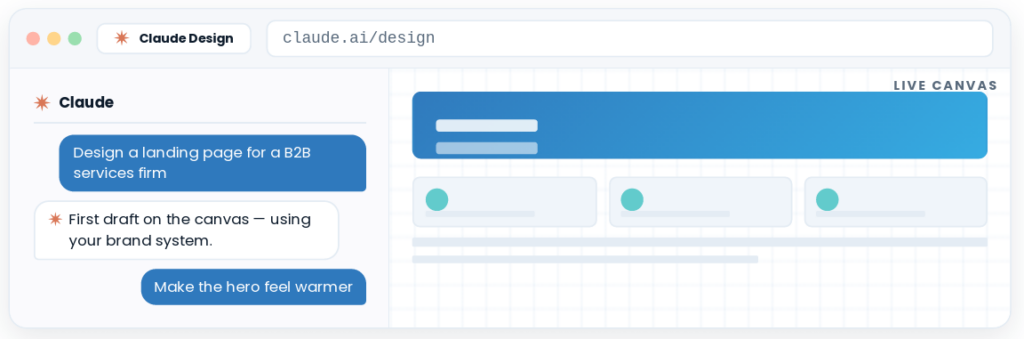
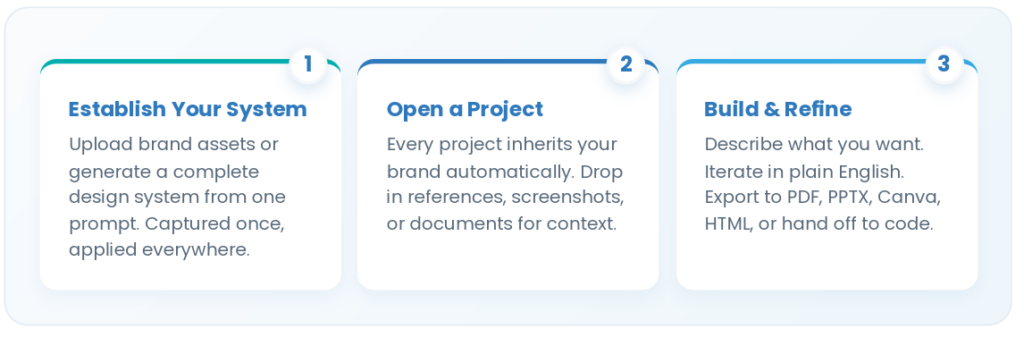
Claude Design is built around a single, deceptively simple idea: design should feel like a conversation, not a software project. The interface is split in two. On the left, a chat panel where you describe what you need. On the right, a live canvas where it appears — and updates as you refine
Four Applications That Matter for Business
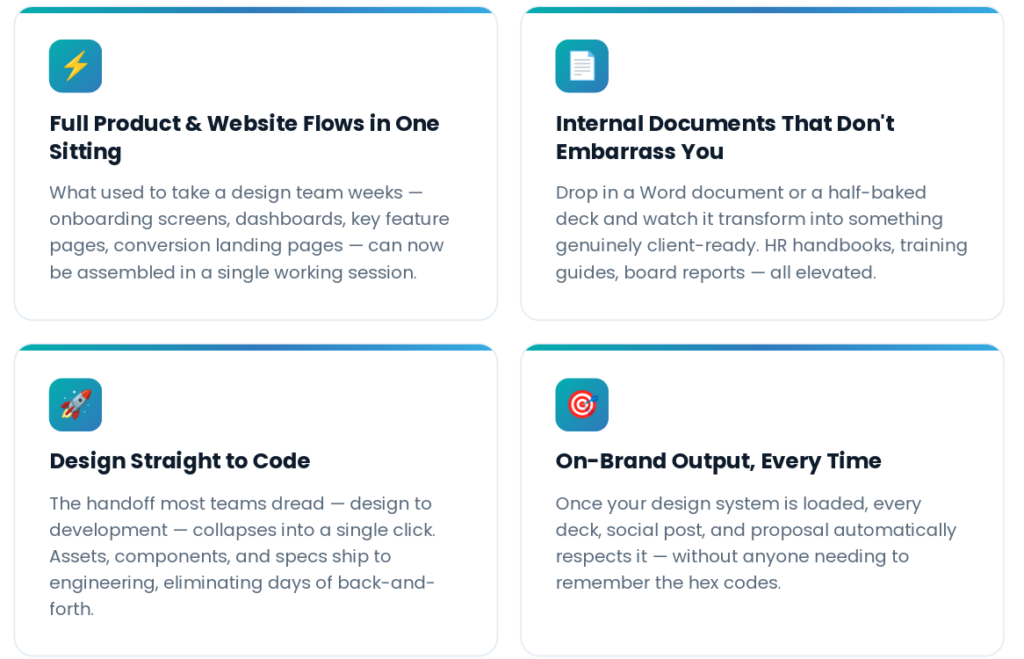
Most coverage of AI design tools focuses on aesthetics — pretty mockups, slick demos. We are more interested in operational impact. Here are four applications where Claude Design quietly transforms what a small or mid-sized organisation can ship in a week
A Practical Example:
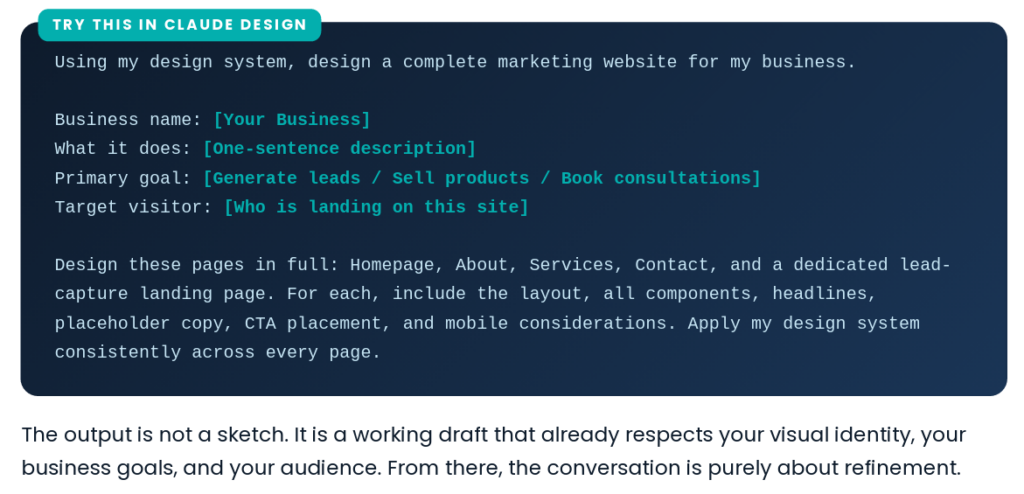
Build a Full Website Imagine you need to generate a complete marketing website. Traditionally: a brief, a kickoff, wireframes, mockups, revisions, and several weeks of waiting. With Claude Design, the same outcome begins with a single, structured prompt
The Habits of Effective Users
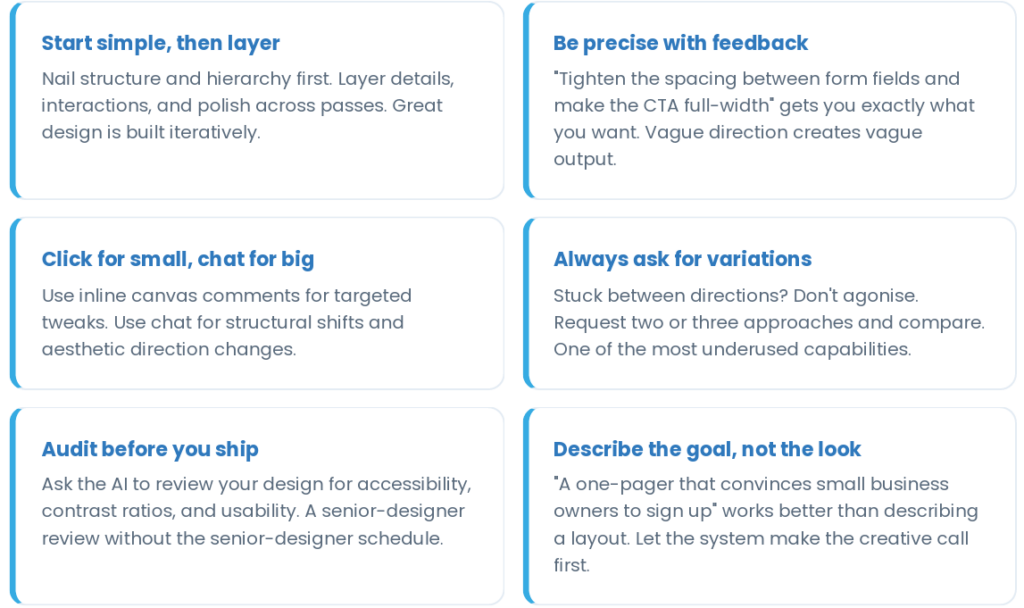
After watching teams adopt these tools, a clear pattern emerges. The people who get the most out of conversational design aren’t the ones with the most polished prompts on day one. They are the ones who treat the tool as a creative partner — iterating fast, staying specific, and trusting the loop.
Why This Matters Now
There is a temptation to treat tools like Claude Design as productivity hacks — useful, but ultimately marginal. We think that view misses the point. What is happening is a redistribution of capability. Skills that used to require years of specialisation are becoming accessible to anyone who can describe what they want clearly. The competitive advantage is no longer access to design talent. It is the speed and clarity with which you can articulate your vision
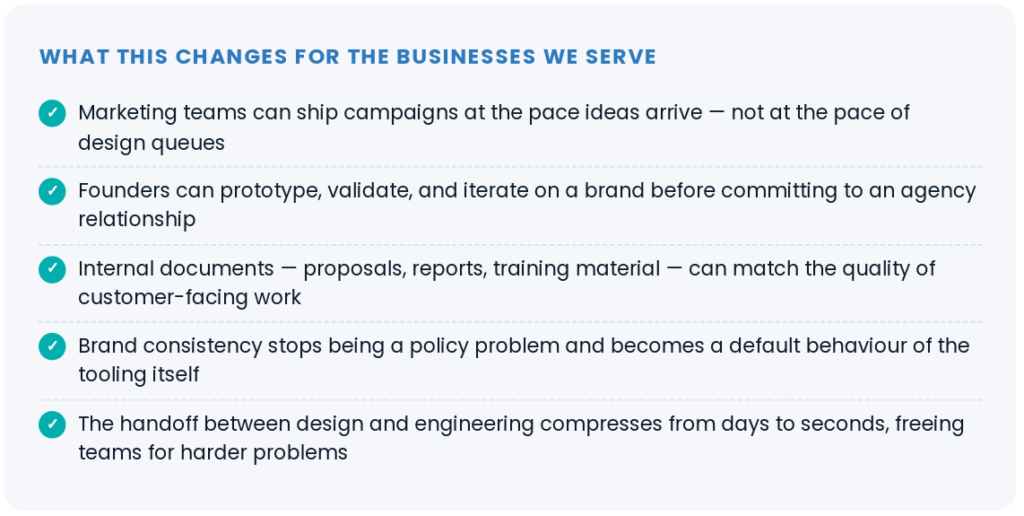
None of this means human creativity becomes less valuable. If anything, the opposite is true. When the mechanical work of producing visuals collapses, the differentiator moves upstream — to the quality of strategic thinking, the clarity of brand position, and the sharpness of underlying ideas.
Where to Begin
We work with organisations across the GCC region whose growth is constrained not by ambition or strategy, but by the operational gap between what they want to ship and what they can actually produce. Tools like Claude Design narrow that gap dramatically — and our recommendation is to start engaging with them now, not in a year, when adoption is no longer a competitive advantage but a baseline expectation. The right approach is rarely to replace existing creative resources outright. It is to integrate AI design tools into the operating rhythm — for first drafts, internal communication, rapid prototyping, and document polish. Senior creative talent on your team becomes more valuable, not less, because their time is freed for the strategic work only they can do